Mr Eazi and MOLIY Reconnect Ghana and Nigeria on New Single ‘Comfort’
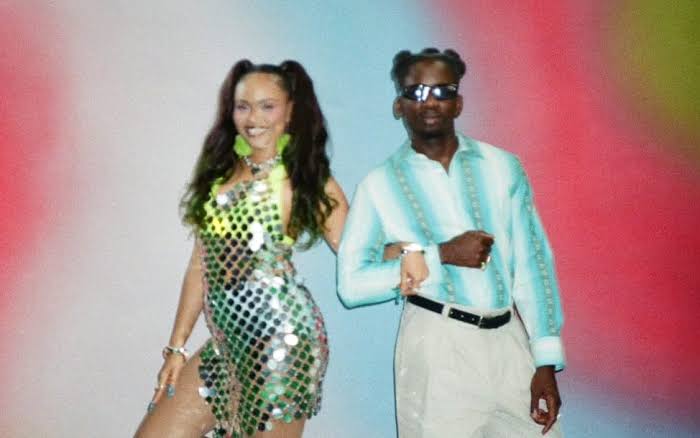
Mr Eazi and MOLIY team up on Comfort, a Ragee-produced Afro-fusion single blending Afrobeats, dancehall and R&B while updating Mr Eazi’s Banku Music sound.
Article
Mr Eazi has returned with “Comfort,” a new collaboration featuring Ghanaian-American singer MOLIY that reconnects the Nigerian artist with the Ghana-influenced sound that has been central to his career while giving the formula a distinctly 2026 update. Released through emPawa Africa, the single is produced by Nigerian hitmaker Ragee and blends Afrobeats, dancehall, R&B and hip-hop elements around a relaxed mid-tempo rhythm. The pairing brings together two artists whose careers have been shaped by the increasingly fluid relationship between Ghanaian and Nigerian pop and the global audiences now listening to both. ‘Comfort’ updates the Banku Music formula Mr Eazi became closely associated with Banku Music during his rise, using the term to describe a blend of Ghanaian highlife and hiplife influences with Nigerian chord structures and contemporary Afropop production. The sound helped distinguish him during an era when Afrobeats was rapidly expanding beyond West Africa. “Comfort” does not attempt to recreate that earlier period exactly. Instead, the record treats Banku Music as a foundation that can absorb newer production choices. Bubbly bass, dancehall movement and R&B smoothness sit around Mr Eazi’s understated vocal approach, giving the song a familiar ease without making it sound locked to the mid-2010s. Mr Eazi has described the track as an updated version of his signature sound. That framing is important because artists with long-running styles often face a difficult balance: change too little and the music can feel repetitive; change too much and the identity that listeners recognise may disappear. “Comfort” aims for the middle ground by preserving his relaxed rhythmic delivery while surrounding it with a fresher pop structure. MOLIY arrives with major global momentum MOLIY brings a different kind of momentum to the collaboration. The Ghanaian-American singer became widely associated with the global rise of “Shake It to the Max (FLY),” a record whose remix passed the billion-stream mark during 2026 according to release coverage around “Comfort.” Her presence gives the single a brighter vocal counterpoint to Mr Eazi’s laid-back delivery. Rather than treating the feature as a short guest verse, the record uses the contrast between their voices as part of its central character. The collaboration also makes geographic sense. Mr Eazi’s career has always moved easily between Nigeria and Ghana, while MOLIY represents a newer generation of Ghana-connected artists building audiences across Afropop, dance music and global streaming spaces. Together, they turn “Comfort” into another example of how difficult it has become to draw hard borders around West African pop. Producers, writers and performers regularly work across Accra, Lagos, London and other creative centres, making collaboration part of the music’s basic structure rather than a special event. Ragee gives the song a proven pop foundation Producer Ragee is an important part of the record’s sound. His recent credits include work associated with Davido and Ayra Starr , giving him experience building songs that can operate in both African pop markets and international streaming environments. On “Comfort,” the production stays intentionally light. Instead of crowding the vocals with dramatic switches, the beat leaves room for the chemistry between the two singers. That restraint suits a song built around flirtation, ease and romantic attraction. The result is closer to an effortless summer record than a maximalist club anthem, even though the rhythm still gives DJs and dance-focused listeners enough movement to work with. The video extends the song’s retro-pop character The single arrives with a video directed by Ademola Falomo. Release coverage describes the visual concept as 1980s-inspired, giving the song a retro-futuristic layer rather than simply reproducing the relaxed studio mood on screen. That visual choice helps widen the campaign around the record. In the current music market, a single often needs several entry points at once: audio streaming, short-form clips, a full video, social media snippets and live performance potential. “Comfort” had already circulated in teaser form before release, helping create familiarity before the full song arrived. That rollout reflects the way artists increasingly test and build records in public before the official release date. Mr Eazi’s role now extends far beyond recording The release also arrives at a point when Mr Eazi’s identity in African music is larger than his own catalogue. Through emPawa Africa, he has built business interests around label services, distribution, publishing and artist development while continuing to release music. That dual role makes each new song part of two stories. One is creative: what does Mr Eazi sound like at this stage of his career? The other is structural: how does an artist who has become an entrepreneur continue to maintain his own recording identity while helping build infrastructure for others? “Comfort” answers the first question by returning to one of the sounds most closely associated with him and updating it rather than abandoning it. A Ghana-Nigeria exchange that still feels central to Afropop At its core, the single works because the Ghana-Nigeria exchange does not feel like a marketing concept added after the music. It is already embedded in both artists’ histories and in the wider evolution of modern Afropop. Mr Eazi helped popularise a cross-border sound years before the current global Afrobeats boom reached its present scale. MOLIY enters the collaboration from a newer generation whose music can move internationally almost immediately through streaming and social media. “Comfort” therefore joins two stages of that evolution in one record. It is familiar enough to remind longtime listeners of Mr Eazi’s Banku Music roots and current enough to benefit from MOLIY’s breakout energy, Ragee’s production and a modern visual rollout. For listeners following West African pop in 2026, the collaboration is less about two national scenes meeting for the first time and more about an exchange that has become one of the region’s defining creative strengths.